
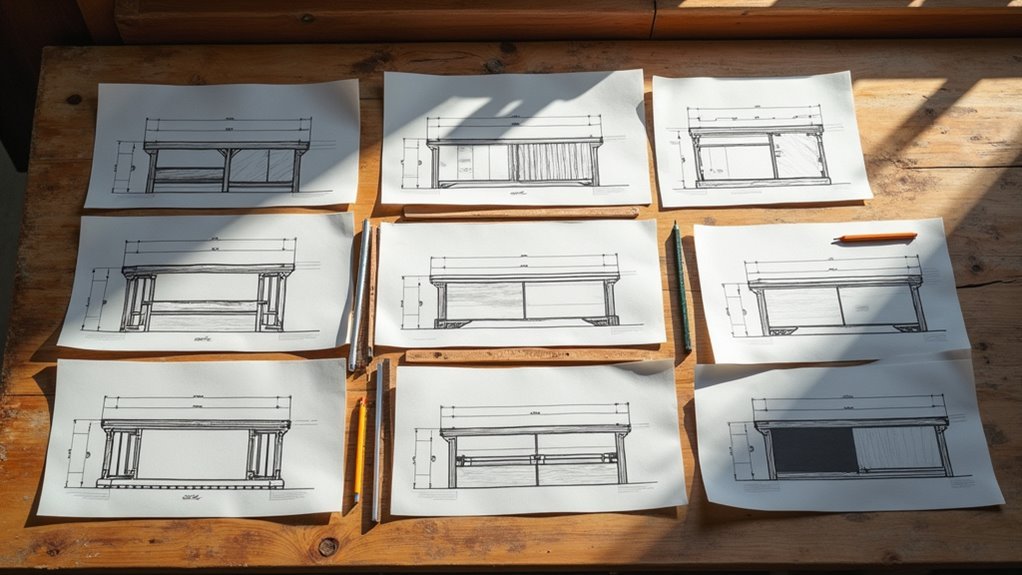
You’ve probably never considered combining storage with precise temperature control, but these innovative bench designs will transform how you think about functional furniture. Whether you’re storing seasonal gear, sensitive electronics, or temperature-dependent items, mastering these beginner-friendly plans means you’ll never worry about climate damage again. Each project uses accessible materials and straightforward techniques, yet the results rival expensive commercial units. The real game-changer lies in understanding which thermal regulation method works best for your specific needs.
Essential Materials and Tools for Temperature-Controlled Storage Benches

Success in building a temperature-controlled storage bench depends heavily on selecting the right materials and having proper tools at your disposal.
The foundation of any successful temperature-controlled storage bench project lies in choosing quality materials and investing in the right tools.
You’ll need insulated materials like thermally modified wood or treated plywood to regulate internal temperatures effectively within your storage space. Essential tools include a track saw or circular saw for precise cuts, plus a router for creating dados and rabbets. A table saw proves invaluable for trimming pieces to exact dimensions.
Don’t overlook waterproof glue and exterior adhesives—they’re vital for moisture resistance and durability. Incorporate ventilation features like drip grooves to prevent moisture buildup.
For enhanced functionality, add weather-resistant cushions and storage solutions such as bins or baskets that fit perfectly into your designated cubbies.
Understanding Thermal Regulation Systems for DIY Furniture
You’ll need to master thermal regulation systems to create a storage bench that maintains consistent temperatures year-round.
Your approach can range from passive heat retention methods using insulation and strategic ventilation to active climate control systems that monitor and adjust conditions automatically.
The materials you choose will directly impact your system’s effectiveness, so you’ll want to prioritize thermally modified wood and proper sealing components.
Passive Heat Retention Methods
When designing a temperature-controlled storage bench, passive heat retention methods offer an energy-efficient approach that doesn’t rely on electrical components or complex mechanical systems.
These techniques are less expensive than active heating solutions and help keep your stored items at stable temperatures naturally.
You can incorporate insulating materials like thermally modified wood, which enhances durability while providing superior thermal regulation.
Design your storage bench with thick walls or double-layer construction to create effective insulating barriers.
Strategic ventilation features, such as air vents or slats, promote circulation and prevent unwanted heat buildup.
Consider adding thermal mass elements like stones or bricks within your bench’s structure.
These materials absorb heat during warmer periods and release it gradually, maintaining consistent internal temperatures without ongoing energy costs.
Active Climate Control Integration
While passive heat retention methods provide excellent baseline temperature control, active climate control integration takes your storage bench’s thermal regulation to the next level with precise, automated temperature management.
You’ll need to install components through carefully drilled screw holes in your bench structure.
Essential active climate control components include:
- Temperature sensors – Monitor internal conditions at top and bottom sections
- Microcontroller system – Arduino-based automation for real-time adjustments
- Heating/cooling elements – Fans and heating pads for active temperature regulation
- Insulation enhancement – Foam barriers to maximize system efficiency
Your low-voltage system runs energy-efficiently while maintaining consistent temperatures.
Design proper airflow channels between top and bottom compartments to prevent temperature variations and guarantee uniform climate distribution throughout your storage space.
Material Selection Considerations
Since your temperature-controlled storage bench depends heavily on material performance, choosing the right wood and insulation components directly impacts your system’s thermal efficiency.
You’ll want to prioritize thermally modified wood (TMW) for its exceptional stability and decay resistance. This chemical-free thermal modification process removes organic compounds, creating superior durability against temperature fluctuations while maintaining outdoor suitability.
If you’re using plywood for structural elements, dry it for one to two weeks before cutting to prevent warping and maintain proper insulation properties.
You’ll need to incorporate quality insulation materials within your design to minimize heat transfer.
Don’t forget waterproof adhesives and finishes—they’re essential for protecting against moisture infiltration that could compromise your bench’s thermal integrity and overall performance.
Basic Wooden Storage Bench With Climate Control Features
Although traditional storage benches offer basic functionality, building a wooden storage bench with climate control features transforms your outdoor or garage space into a protective environment for temperature-sensitive items.
You’ll create an effective climate-controlled unit by integrating specific design elements that regulate temperature and moisture.
Essential climate control features include:
- Sealed lid with weather stripping – Prevents moisture ingress and maintains stable internal temperatures
- Strategic ventilation placement – Promotes proper airflow while preventing humidity buildup
- Insulated construction materials – Uses treated plywood with thermal modification for enhanced durability
- Waterproof exterior protection – Applies specialized glue and finishes to withstand outdoor elements
You can incorporate organizational compartments without compromising climate control effectiveness, ensuring your temperature-sensitive items remain protected while maintaining both functionality and aesthetic appeal.
Insulated MDF Storage Bench With Smart Ventilation
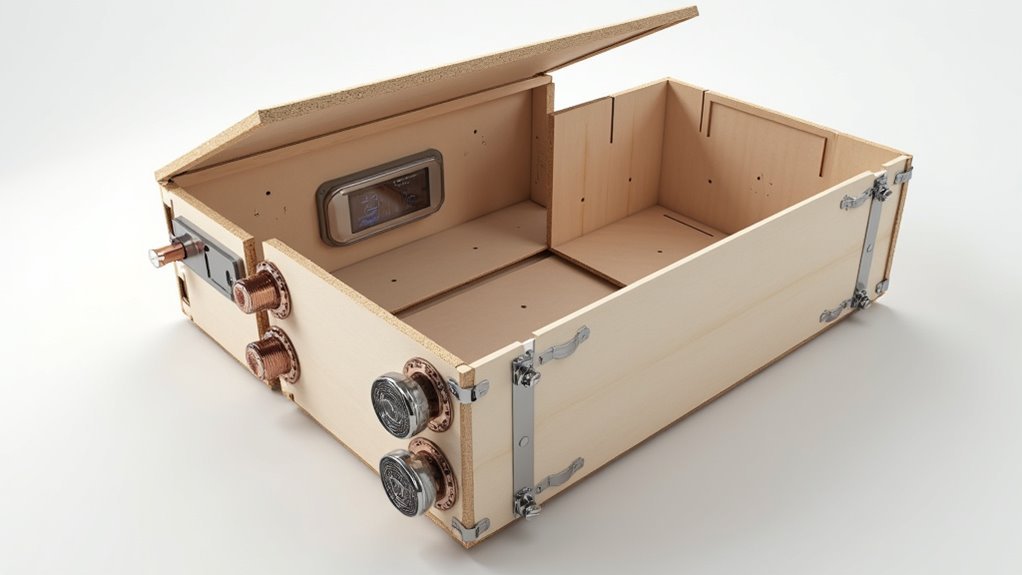
Medium Density Fiberboard (MDF) provides superior insulation properties compared to traditional plywood, making it an excellent foundation for temperature-controlled storage solutions.
You’ll want to select high-quality insulated MDF that’s at least 1 inch thick to maximize thermal performance and guarantee long-term durability.
When building your bench, incorporate strategically placed vents or louvers on the sides or bottom. These features facilitate proper airflow while maintaining a sleek appearance that won’t compromise your design aesthetic.
Smart ventilation systems promote air circulation and prevent moisture buildup, protecting your stored items from mold and mildew damage.
Don’t overlook proper sealing around all joints and edges. This vital step maximizes your MDF bench’s insulation properties by preventing unwanted heat transfer and maintaining a stable internal environment for your belongings.
Outdoor Weather-Resistant Bench With Temperature Monitoring
You’ll need to select materials that can withstand harsh outdoor conditions while maintaining structural integrity for your temperature-controlled bench.
Treated plywood or thermally modified wood provides excellent weather resistance and prevents decay from moisture exposure.
Installing a digital temperature sensor system lets you monitor internal conditions and guarantees your stored items stay within safe temperature ranges.
Weather-Resistant Material Selection
When building an outdoor storage bench that’ll withstand harsh weather conditions, your material choices determine the project’s long-term success.
You’ll need materials that resist moisture, decay, and temperature fluctuations while maintaining structural integrity.
Consider these top weather-resistant options:
- Thermally modified wood (TMW) – Enhanced stability and natural resistance to decay and insects without chemicals
- Treated plywood – Popular structural choice that requires 1-2 weeks drying time before cutting to prevent warping
- Cedar decking – Natural weather resistance and durability for slats, though more expensive than alternatives
- Waterproof glue – Essential for moisture-resistant assembly and long-term joint integrity
Don’t forget to incorporate a drip groove on your bench lid.
This simple feature facilitates rainwater drainage, preventing accumulation that could damage stored items and compromise your bench’s longevity.
Temperature Sensor Integration
Temperature monitoring transforms your outdoor storage bench from a simple container into a smart storage solution that protects your valuable items.
You’ll need a weather-resistant temperature sensor rated for outdoor use, capable of withstanding rain, humidity, and extreme temperatures.
Position your sensor away from direct sunlight and ventilation openings inside the bench to guarantee accurate internal temperature readings. Connect the sensor to a mobile app or display unit that’ll send you alerts and maintain data logs of temperature changes.
Consider solar-powered sensor options to eliminate battery replacements while maintaining continuous monitoring. This setup’s particularly vital if you’re storing heat or cold-sensitive items, as you’ll receive real-time updates about environmental conditions regardless of external weather fluctuations.
Indoor Smart Storage Bench With Heating Elements
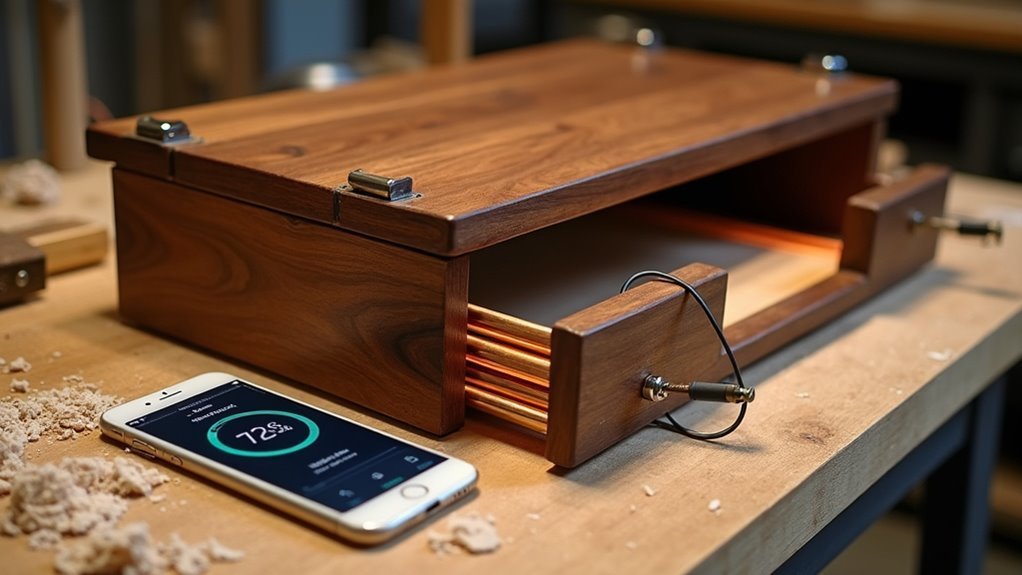
Although winter brings its own charm, sitting on cold furniture can quickly dampen your comfort at home. You can solve this problem by building an indoor smart storage bench with integrated heating elements that’ll keep you warm while providing functional storage.
Your heated bench should include these essential features:
- Electric heating elements controlled by smart thermostat or mobile app
- Insulated materials around heating components for energy efficiency
- Automatic shut-off and overheat protection for safety
- Customizable storage compartments for blankets, shoes, or other items
You’ll want to install heating pads or mats directly under the seating surface, ensuring even heat distribution. The insulation prevents heat loss while maintaining energy efficiency.
Your design can incorporate modern aesthetics that complement your indoor decor while delivering both warmth and storage functionality.
Solar-Powered Temperature-Regulated Outdoor Bench
Since outdoor seating often becomes uncomfortably hot in summer or painfully cold in winter, you can create a solar-powered temperature-regulated outdoor bench that automatically adjusts to provide year-round comfort. You’ll harness sunlight through photovoltaic panels, converting it into electricity to power cooling fans or heating elements.
| Component | Function |
|---|---|
| Solar Panels | Convert sunlight to electricity |
| Battery Storage | Store excess energy for nighttime use |
| Temperature Controls | Allow user customization settings |
| Weather-Resistant Materials | Guarantee outdoor durability |
You’ll need to integrate a small battery storage system for consistent operation during cloudy days. Position your bench where it receives maximum sunlight, angling panels appropriately for ideal energy absorption. Use thermally modified wood or treated plywood for weather resistance, and include adjustable settings for personalized comfort control.
Compact Entryway Bench With Built-In Climate Control
You’ll need to integrate specific climate control components like insulation panels, ventilation systems, and sealing mechanisms into your compact entryway bench design.
The assembly process requires careful attention to creating an airtight seal while maintaining easy access to your stored items through removable bins or adjustable shelving.
Your installation must account for proper positioning near electrical outlets if you’re adding powered elements, or ideal sun exposure for solar-powered climate features.
Climate Control Components
Three essential components work together to create an effective climate control system for your compact entryway bench: heating elements, cooling units, and air circulation mechanisms.
You’ll need compact climate control units that fit discreetly within your bench without sacrificing storage space. These units maintain consistent temperatures while operating quietly in the background.
Here are the key components you’ll integrate:
- Heating elements – Small coils or pads that warm the interior during cold conditions
- Cooling units – Mini compressors or thermoelectric coolers for temperature reduction
- Air circulation fans – Distribute conditioned air evenly throughout the storage area
- Temperature sensors – Monitor internal conditions and trigger adjustments automatically
You can enhance the system’s effectiveness by incorporating proper vents for airflow distribution.
Smart technology integration allows remote monitoring and adjustments through smartphone apps, giving you complete control over your bench’s climate.
Compact Design Assembly
While assembling your compact entryway bench requires careful planning, proper material selection forms the foundation of a successful build.
You’ll start by cutting treated plywood for the outer frame and thermally modified wood for interior components. Install insulated panels between the double-wall structure, ensuring they’re properly fitted to maintain temperature stability.
Next, you’ll create the lid with an integrated drip groove by routing a channel around the perimeter’s underside. This prevents water infiltration while maintaining the seal.
Apply waterproof glue to all joints and use exterior adhesive for panel attachment.
Mount your solar-powered ventilation system in the back panel, drilling appropriately sized holes for airflow.
Finally, install weather stripping around the lid’s contact points to complete the climate-controlled seal.
Entryway Installation Guide
Before mounting your climate-controlled bench, identify the perfect entryway location that provides protection from direct weather exposure while maintaining access to power sources.
You’ll need adequate clearance for the lid to open fully without hitting walls or overhead obstacles.
Position your bench to take advantage of natural drainage patterns and guarantee the drip groove faces away from high-traffic areas.
Mark mounting points carefully, accounting for wall studs or concrete anchors depending on your entryway surface.
Essential installation considerations:
- Secure electrical connections with weatherproof outlets within three feet of the bench location
- Level the bench using adjustable feet or shims to prevent moisture pooling
- Install proper ventilation gaps around the climate control unit for peak airflow
- Test all climate features before finalizing the installation
Advanced Storage Bench With Digital Temperature Display
Although basic storage benches serve many purposes, an advanced version with digital temperature display transforms your furniture into a precision climate-controlled environment.
You’ll need basic electrical knowledge and components including microcontrollers and display screens to integrate temperature sensors and digital readout systems. Add insulation materials like foam or reflective barriers to enhance temperature regulation and efficiency within your bench design.
You can power this temperature-controlled feature using either rechargeable batteries or plug-in adapters, providing flexibility for outdoor or indoor placement.
Customize your bench with programmable temperature settings, alarms for temperature fluctuations, and smart home system integration for remote monitoring.
This advanced storage solution guarantees your stored items remain in ideal condition while you monitor the internal environment precisely.
Multi-Zone Storage Bench for Different Temperature Needs
Taking temperature control to the next level, you can create separate climate zones within a single storage bench to accommodate items with vastly different environmental requirements.
This multi-zone approach lets you store outdoor gear alongside delicate seasonal decorations without compromising either’s condition.
Key features for effective multi-zone design include:
- Insulated panels between compartments to maintain distinct temperature levels
- Thermally modified wood construction paired with insulated foam for ideal temperature regulation
- Adjustable ventilation systems in each zone to control humidity and air circulation
- Removable dividers that allow you to customize compartment sizes based on storage needs
You’ll prevent damage to sensitive items while maximizing storage efficiency.
Each zone operates independently, giving you precise environmental control for different storage requirements.
Frequently Asked Questions
How Much Does It Cost to Build a Temperature-Controlled Storage Bench?
You’ll spend $150-400 building one, depending on materials and cooling system choice. Basic insulation and thermoelectric coolers cost less, while compressor-based systems increase expenses. Your bench size and wood quality affect the final price considerably.
What Permits or Approvals Are Needed for Electrical Temperature Control Systems?
You’ll need electrical permits from your local building department for hardwired systems. Simple plug-in units typically don’t require permits, but check local codes since requirements vary greatly by jurisdiction and installation complexity.
How Long Does the Battery Last on Solar-Powered Temperature Regulation?
You’ll get 2-4 days of battery life from most solar temperature systems, depending on battery capacity and power draw. Larger batteries last longer, but you’ll need adequate solar panel sizing for reliable recharging.
Can I Retrofit My Existing Storage Bench With Temperature Control Features?
You can retrofit your existing storage bench with temperature control features by adding insulation, installing small fans or heating elements, and incorporating a thermostat controller with temperature sensors for effective climate management.
What Warranty Coverage Exists for DIY Temperature Monitoring Electronic Components?
You’ll find most DIY electronic components offer limited manufacturer warranties, typically 30-90 days. Temperature sensors and controllers usually include one-year coverage, but you’re responsible for installation damage or misuse during your projects.


Leave a Reply