
You’re tossing and turning again, aren’t you? That uncomfortable temperature in your bedroom isn’t just annoying—it’s sabotaging your sleep quality and next-day performance. Whether you’re sweating through summer nights or shivering under winter covers, your body needs that sweet spot between 60-67°F to achieve deep, restorative sleep. The good news is you don’t need expensive HVAC upgrades to transform your sleep environment. Simple DIY techniques can create the perfect temperature zone.
Strategic Fan Placement for Maximum Airflow
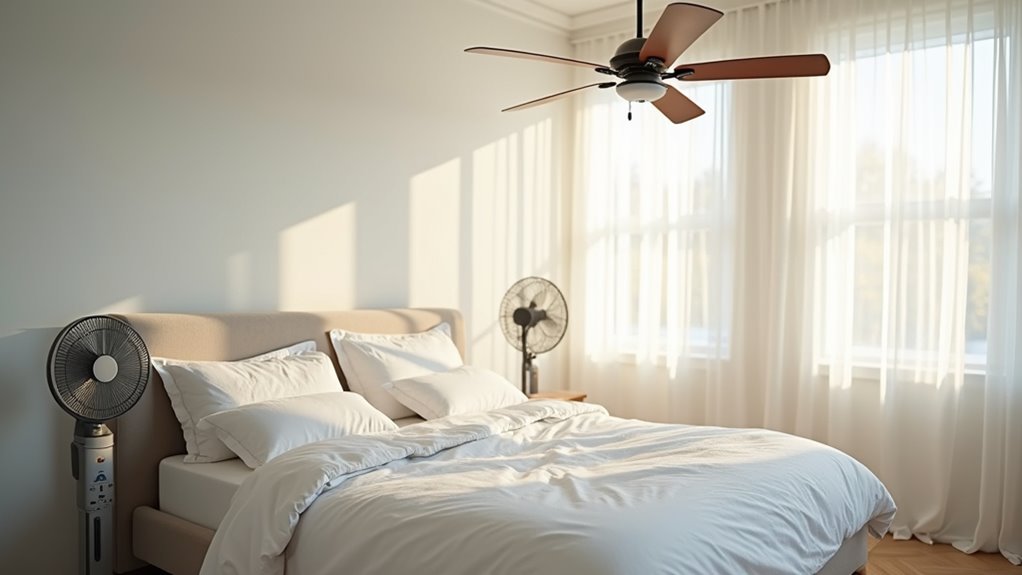
When summer heat makes sleep elusive, strategic fan placement becomes your most cost-effective weapon against sweltering nights. Position box fans in windows facing outward to expel hot air while drawing in fresh air from cooler areas.
Set your ceiling fan to rotate counterclockwise, creating a wind-chill effect that enhances natural airflow throughout the room.
Create powerful cross-ventilation by placing fans across from each other, establishing a consistent circulation pattern that prevents heat accumulation.
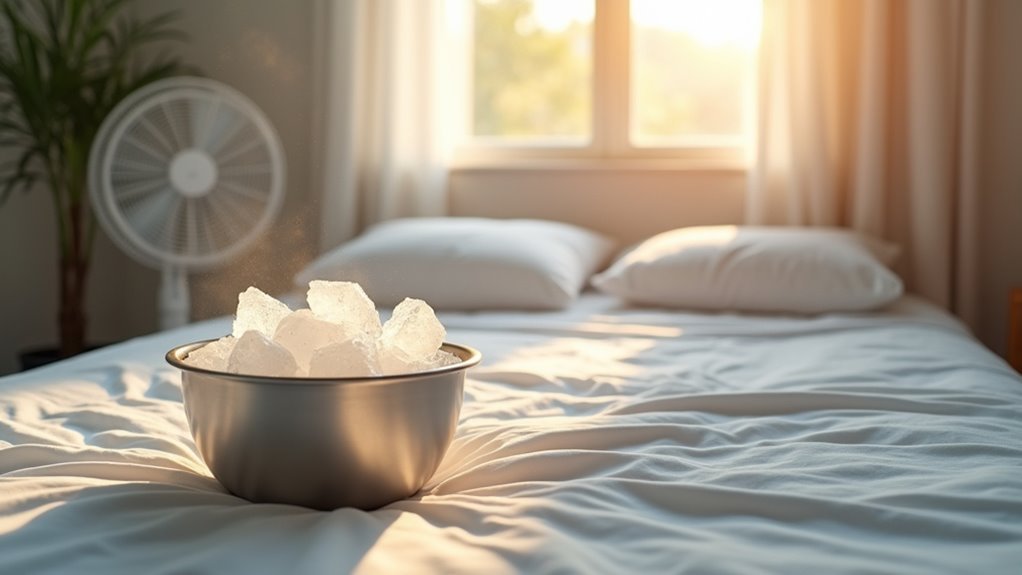
For an enhanced cooling effect, position a shallow bowl of ice in front of your fan to distribute cool mist.
Ascertain furniture doesn’t block your fan’s path – unobstructed airflow maximizes each device’s efficiency, transforming your bedroom into a comfortable sanctuary despite rising temperatures.
Freezing Bedding and Sleepwear for Instant Relief
How can you achieve instant cooling relief when temperatures soar beyond your fan’s capacity? Freezing your bedding offers an immediate solution that’ll transform your sleep experience. Place your sheets and pillowcases in the freezer for 1-2 hours before bedtime. They’ll remain pliable while providing essential cooling relief as you settle in.
| Item | Freezing Time |
|---|---|
| Sheets/Pillowcases | 1-2 hours |
| Socks | 30-60 minutes |
| Damp towel | 45 minutes |
Don’t overlook freezing your socks – cool feet help regulate body temperature throughout the night. For instant relief, freeze a damp towel and lay it over your sheets temporarily. These simple techniques considerably improve sleep quality by preventing overheating, ensuring you’ll enjoy enhanced sleep comfort without expensive cooling systems.
Creating DIY Air Conditioning With Ice and Fans
You can transform ordinary household items into an effective cooling system by combining ice and fans in strategic ways.
Start with the basic ice bowl setup, then expand your approach by positioning multiple fans throughout your room to maximize air circulation.
These simple techniques will help you create cooling mist and airflow patterns that greatly drop your room’s temperature without expensive equipment.
Ice Bowl Fan Setup
Although traditional air conditioning can strain your budget and spike your electricity bill, creating a DIY cooling system with just a box fan and a bowl of ice offers an effective alternative that’ll transform any stuffy room into a comfortable sleep sanctuary.
Position your fan facing outward in a window to expel hot air, then place a shallow bowl filled with ice cubes directly in front of it. This setup circulates the cool air generated by melting ice, effectively lowering your room temperature.
The fan pushes chilled air throughout the space, creating a rejuvenating cooling effect that’s remarkably energy-efficient. You’ll maximize results by using a wide, shallow bowl that exposes more ice surface area to the airflow.
Strategic Fan Positioning Tips
While the ice bowl method provides immediate cooling relief, strategic fan positioning amplifies this effect and transforms your entire room into a comfortable sleep environment.
Position a box fan in front of an open window to expel hot air, creating powerful cross-ventilation when paired with another fan pointing inward. Set your ceiling fans to rotate counterclockwise during summer months—this generates a wind-chill effect that makes rooms feel considerably cooler.
Utilize multiple fans throughout your space to establish continuous airflow patterns. Keep windows and doors open to maximize natural ventilation, allowing fresh air to circulate freely.
This multi-fan approach creates an efficient cooling system that dramatically improves your room’s temperature and enhances sleep quality without expensive air conditioning units.
Cooling Mist Creation Methods
Since strategic fan positioning establishes the foundation for effective cooling, you can amplify these results by creating your own air conditioning system using ice and fans.
Position your fan directly in front of a shallow bowl filled with ice water. This setup allows the airflow to pick up moisture, generating a cooling mist that circulates throughout your room.
For enhanced results, drape a wet towel over the fan blades to create additional cool, damp air circulation.
Use ice in shallow dishes rather than deep containers to maximize surface area exposure, promoting faster melting and more efficient cooling effect.
Experiment with different fan speeds to find the ideal balance between effective cooling and quiet operation for uninterrupted sleep.
Optimizing Bedding Materials for Temperature Control
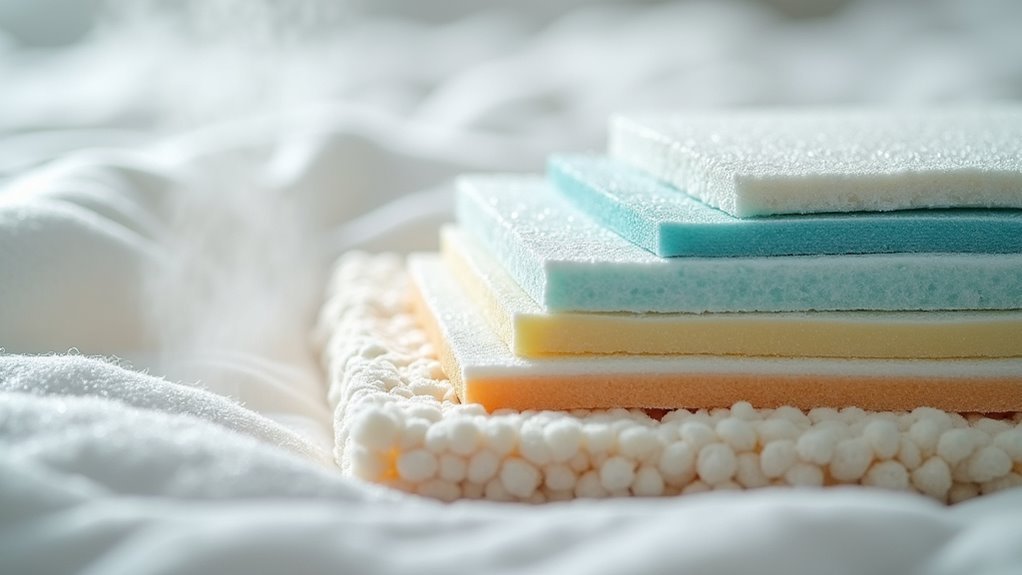
Your bedding materials can make or break your sleep temperature, so you’ll want to choose fabrics that work with your body instead of against it.
The right combination of breathable sheets, cooling pillows, and temperature-regulating mattress materials creates a foundation for comfortable sleep year-round.
Let’s explore how different fabric choices, pillow technologies, and mattress materials impact your nighttime temperature control.
Best Fabric Choices
When you’re selecting bedding materials for ideal temperature control, the fabric you choose can make or break your sleep quality. Breathable fabrics like organic cotton, linen, and bamboo deliver superior moisture-wicking properties that regulate body temperature naturally.
| Cooling Options | Heat-Trapping Materials |
|---|---|
| Bamboo sheets | Polyester bedding |
| Lightweight cotton pajamas | Flannel sleepwear |
| Linen pillowcases | Heavy synthetic blends |
| Organic cotton comforters | Thick fleece blankets |
Bamboo sheets excel at absorbing sweat while maintaining coolness throughout the night. Pair them with lightweight cotton pajamas for peak air circulation that minimizes sweat accumulation.
Don’t forget cooling gel-infused pillows and mattress toppers – they’re designed to dissipate heat effectively. Avoid polyester and flannel, as these materials trap heat and moisture, disrupting your sleep comfort.
Cooling Pillow Options
Beyond fabric selection, your pillow choice plays a major role in maintaining ideal sleep temperature. Cooling pillows made with gel-infused memory foam or breathable materials effectively dissipate heat throughout the night.
Buckwheat pillows excel at promoting airflow, preventing heat buildup while providing firm neck support.
Natural fiber pillows filled with bamboo or eucalyptus offer excellent moisture-wicking properties, keeping your pillow cool and dry during sleep.
For advanced temperature regulation, consider phase-change material (PCM) pillows that absorb and release heat as needed, automatically adjusting to your body’s requirements.
Don’t overlook your pillowcase selection. Lightweight covers made from organic cotton or linen enhance airflow and comfort, creating an additional cooling layer that complements your pillow’s temperature-regulating features for peak sleep comfort.
Mattress Material Impact
Since your mattress represents the largest surface area in contact with your body during sleep, its material composition directly affects your overnight temperature regulation.
Memory foam retains heat, making it problematic for hot sleepers, while cooling gel-infused options and latex provide superior airflow and breathability.
Choose breathable fabrics like organic cotton, bamboo, or linen for mattress covers to enhance moisture-wicking properties.
With 57% of Americans occasionally sleeping too hot, selecting mattress materials with cooling technology becomes essential for maintaining stable sleep temperature.
Proper airflow and breathability greatly improve sleep quality, as 22% cite overheating as their primary sleep disruptor.
Consider upgrading to a cooling mattress or adding a cooling topper to achieve the ideal temperature for sleep within the best 60-67°F range.
Wet Towel Cooling Techniques for Hot Nights
As temperatures soar during sweltering summer nights, you’ll find that a simple wet towel can become your best ally for achieving restful sleep. This technique works by lowering your body temperature through evaporative cooling as you drift off. For ideal cooling effects, soak your towel in cold water or add ice cubes before application.
Place the damp towel directly over your sheets to create an immediate cooling sensation on hot nights. To protect your mattress, lay a dry towel underneath to prevent moisture damage.
This method creates a localized cooling effect that makes falling asleep easier and helps maintain a comfortable environment throughout the night. It’s particularly effective in warm climates, offering a cost-effective solution for better sleep.
Managing Daytime Heat to Cool Nighttime Rooms
While wet towel techniques provide immediate relief, preventing heat buildup during the day creates a naturally cooler bedroom environment by evening.
Managing daytime heat starts with closing drapes or blinds before sunrise. Reflective materials in curtains block up to 90% of sunlight, greatly reducing heat infiltration. Light-colored window treatments work similarly to repel thermal energy.
Keeping windows closed during peak afternoon hours prevents warm air from entering your space. You’ll want to open them only after sunset when outdoor temperatures drop.
Turn off unnecessary lights and unplug electronics that generate heat throughout the day. These heat sources considerably impact preventing indoor temperatures from rising.
This strategic approach to cool nighttime rooms requires minimal effort but delivers maximum comfort for sleep.
Body Temperature Regulation Through Hydration
You can dramatically improve your sleep quality by strategically timing your water intake and choosing the right temperature for maximum cooling effect.
Drinking ice-cold water 30-60 minutes before bedtime helps lower your core body temperature, while staying properly hydrated throughout the day guarantees your body’s natural cooling mechanisms work efficiently.
When dehydration strikes, your skin temperature rises and sweating becomes less effective, creating a cycle of discomfort that’ll keep you tossing and turning all night.
Optimal Hydration Timing
Though most people focus on room temperature and bedding when trying to sleep cool, your hydration habits throughout the day play an essential role in regulating your body’s internal thermostat.
Ideal hydration timing matters considerably for sleep quality. You’ll want to stay hydrated throughout the day, especially in hot weather, since 57% of Americans occasionally sleep too hot.
Drinking ice water before bed effectively lowers your core body temperature, making it easier to fall asleep. However, you shouldn’t rely solely on beverages to cool down your room temperature.
Avoid caffeinated and sugary drinks that cause dehydration and disrupt temperature regulation. Keep water bedside for nighttime hydration needs, helping counteract sweating while maintaining cooler body temperature throughout sleep.
Water Temperature Effects
Dehydration can increase your core body temperature by up to 0.5°F, making comfortable sleep nearly impossible when you’re already battling hot conditions. Water temperature plays an important role in regulating your body temperature for ideal sleep quality.
| Cooling Method | Temperature Effect |
|---|---|
| Ice water before bed | Counteracts night sweats |
| Cold showers/baths | Lowers core body temperature |
| Mint-infused water | Provides invigorating cooling sensation |
| Cucumber water | Maintains lower nighttime temperature |
| Proper hydration timing | Prevents temperature disruption |
Cold showers before sleep promote heat release from your skin, preparing your body for rest. Cool drinks infused with mint or cucumber offer additional cooling benefits. Since 22% of people cite overheating as their primary sleep disruptor, strategic hydration becomes essential for comfortable nights.
Dehydration Sleep Disruption
While your body relies on adequate hydration to maintain ideal sleeping temperature, even mild dehydration disrupts this delicate balance and triggers a cascade of sleep-sabotaging effects.
When you’re dehydrated, your core body temperature rises, making it harder to achieve the natural cooling your body needs for quality sleep. This affects approximately 57% of Americans who already sleep too hot.
Proper hydration throughout the day prevents these temperature fluctuations that destroy sleep quality. You’ll experience fewer night sweats and maintain a more comfortable sleeping temperature when your fluid levels stay at their best.
Keep water nearby and sip regularly, but avoid alcohol before bed since it causes dehydration and increases skin temperature, creating the opposite effect you want for restful sleep.
Pulse Point Cooling for Rapid Temperature Drop
When you’re struggling with overheating during sleep, targeting your body’s pulse points offers one of the fastest ways to cool down effectively. These areas have blood vessels close to the skin, making cold compresses and ice packs incredibly efficient at lowering your body temperature.
Apply cooling treatments to these key locations for 20 minutes to create a cooling sensation throughout your entire body:
| Pulse Point | Application Method |
|---|---|
| Wrists | Ice packs wrapped in thin cloth |
| Neck | Cold compresses on sides |
| Ankles | Frozen rice-filled sock |
| Behind ears | Small cold pack |
This technique alleviates night sweats and helps you fall asleep faster during hot nights. Regular pulse point cooling greatly enhances sleep quality, especially if you frequently experience nighttime overheating.
Smart Window Management for Heat Control
Beyond targeting your body’s pulse points, your windows present another powerful opportunity to control your bedroom’s temperature naturally.
Keep blinds closed during daylight hours to slash heat buildup by 45%. Blackout curtains work double-duty, blocking light while reflecting heat away from your room.
Blackout curtains deliver dual benefits—blocking harsh daylight while deflecting heat to keep your bedroom naturally cooler throughout the day.
When evening arrives, open windows to invite cooler air around your space. Create enhanced ventilation by positioning box fans near windows—they’ll push hot air out while pulling fresh air in.
For maximum cooling, establish a cross-breeze by opening windows on opposite sides of your room.
Try the wet sheet technique: hang a damp sheet in front of an open window. As air passes through the moist fabric, evaporation naturally lowers temperatures entering your bedroom.
Floor-Level Sleeping for Natural Temperature Benefits
Since hot air naturally rises and cooler air settles near the ground, you’ll discover that sleeping at floor-level puts you in the coolest zone of your room. This natural temperature stratification offers significant temperature benefits that can dramatically improve your sleep quality without any energy costs.
Floor-level sleeping maximizes airflow around your body while keeping you comfortable in the coolest available air.
Here’s how to optimize this approach:
- Use breathable bedding like cotton sheets or bamboo materials that won’t trap heat against your body.
- Place a thin mat directly on the floor to provide minimal cushioning while maintaining ground-level cooling.
- Position yourself away from walls to maximize airflow circulation around your sleeping area.
Many cultures have embraced this cooling strategy for centuries, particularly in warmer climates.
Electronics and Lighting Heat Reduction Strategies
While floor-level sleeping takes advantage of natural temperature differences, the electronics and lighting in your bedroom actively work against you by pumping heat into your sleep environment. You’ll dramatically reduce unnecessary heat by unplugging devices that draw power even when turned off.
| Device Type | Heat Reduction Strategy | Temperature Impact |
|---|---|---|
| Lighting | Switch to LED bulbs | 80% less heat output |
| Computers/TVs | Remove from bedroom | Significant cooling |
| Standby Electronics | Unplug when not used | Moderate reduction |
| Window Treatments | Light-colored curtains | Blocks external heat |
| Automated Controls | Set evening timers | Prevents heat buildup |
Replace incandescent and halogen lighting with LEDs to cut heat by 80%. Use blackout curtains to block sunlight, and set timers for electronics to automatically shut off, creating ideal temperature conditions for better sleep.
Warming Techniques for Cold Sleep Environments
When temperatures drop, your sleep quality doesn’t have to suffer if you implement the right warming strategies.
Start by creating layers of warmth through your bedding choices. Thermal blankets provide excellent insulation, while layering blankets allows you to adjust heat levels throughout the night.
Before climbing into bed, take a warm bath to raise your core temperature, then use a hot water bottle to pre-warm the sheets for maximum comfort.
Your sleepwear matters just as much as your bedding. Choose moisture-wicking pajamas made from materials like merino wool to maintain body heat while managing sweat.
Here’s your warming action plan:
- Pre-heat your bed with heating pads or hot water bottles
- Layer thermal blankets strategically for adjustable warmth
- Maintain the ideal range for sleep at 60-67°F with proper insulation
Room Layout Modifications for Temperature Optimization
Although your bedroom’s furniture arrangement might seem purely aesthetic, strategic positioning can dramatically impact your sleep temperature.
Start by lowering your bed closer to the ground, where cooler air naturally settles, avoiding the heat that rises upward. If you’re in a multi-story home, consider relocating to the first level since upper floors trap more heat.
Rearrange furniture to create clear pathways for airflow throughout your room. Remove bulky items and minimize clutter that blocks air circulation.
Install blackout curtains to prevent daytime heat buildup while maintaining comfortable nighttime temperatures.
These simple layout modifications enhance ventilation, reduce heat accumulation, and create ideal cooling conditions for better sleep without expensive equipment or major renovations.
Frequently Asked Questions
How to Make a Sleeping Cooler?
You’ll sleep cooler by freezing your sheets beforehand, positioning fans strategically near windows, wearing breathable cotton pajamas, using blackout curtains, and applying ice packs to your wrists and neck before bed.
How to Survive the Night Without AC?
You’ll survive hot nights by placing fans near ice bowls, closing curtains during daytime, drinking cold water, hanging wet sheets by windows, and using breathable cotton bedding.
How Do You Cool Down When Trying to Sleep?
You’ll cool down by freezing your sheets beforehand, placing ice packs on pulse points, positioning fans near ice water bowls, drinking cold water, and keeping curtains closed during daytime hours.
What Temperature Is Unsafe to Sleep In?
You shouldn’t sleep in temperatures above 75°F, which causes restlessness and poor sleep quality. Temperatures below 54°F are also unsafe, creating discomfort and potential hypothermia risks during sleep.


Leave a Reply