
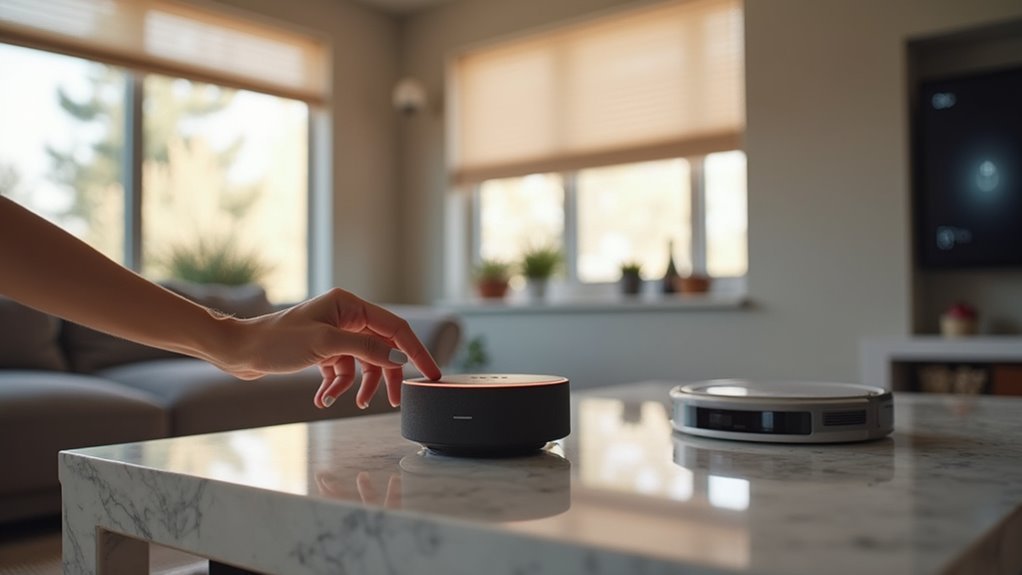
You’ve invested in smart home devices, but your voice commands aren’t delivering the seamless control you expected. Whether your assistant misunderstands basic requests or your devices respond inconsistently, these frustrations can make you question the technology altogether. The truth is, most people skip the essential setup steps that transform clunky voice interactions into effortless home automation. Master these ten strategic approaches, and you’ll reveal the full potential of your smart home system.
Choose the Right Voice Assistant for Your Smart Home Setup
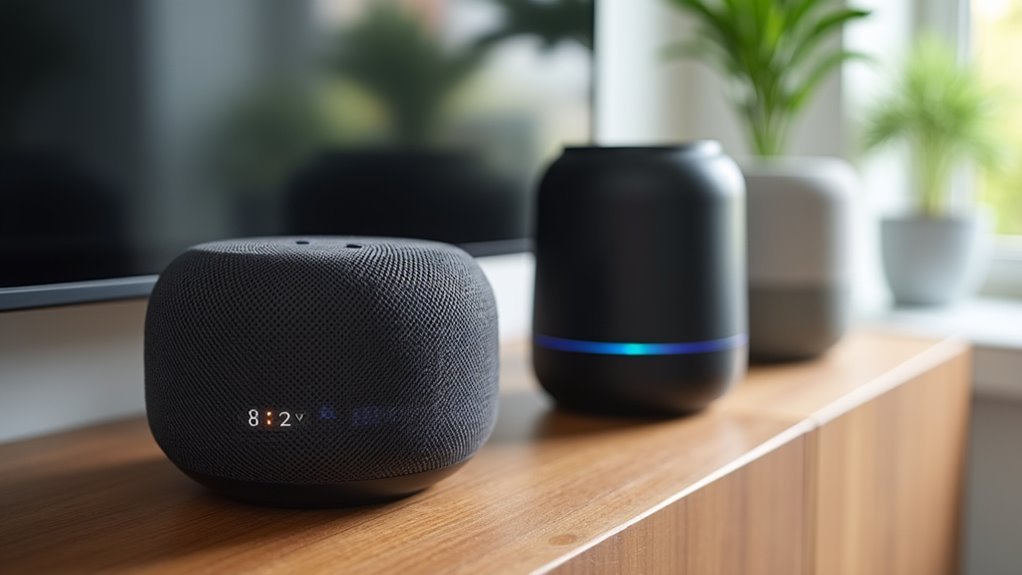
Since your smart home’s effectiveness largely depends on seamless communication between devices, selecting the right voice assistant becomes your most critical first decision.
You’ll need to evaluate compatibility between your existing smart devices and voice assistants like Amazon Alexa, Google Assistant, or Apple Siri. Consider each platform’s unique strengths: Google Assistant excels at controlling multiple devices simultaneously, while Alexa offers extensive smart home product integration.
Your accent and language preferences matter too, as recognition accuracy varies between assistants. If you’re building around specific ecosystems like Google Nest, stick with that manufacturer’s assistant for peak performance.
Recognition accuracy varies significantly between voice assistants depending on your accent and native language preferences.
Don’t overlook privacy settings either—some assistants like Josh.ai process commands locally rather than in the cloud, offering enhanced security.
Assign Clear and Unique Device Names for Better Recognition
You’ll dramatically improve voice recognition accuracy by replacing generic labels like “Light 1” or “Switch 2” with clear, descriptive names that specify both location and function.
Choose simple names like “Bedroom Ceiling Fan” or “Front Porch Light” that your voice assistant can easily distinguish from other devices in your home.
Test each device name by speaking commands aloud to guarantee your assistant consistently recognizes and responds to your intended device without confusion.
Avoid Generic Device Labels
Why do voice commands sometimes fail to execute properly even when spoken clearly? The culprit is often generic device labels that confuse your voice assistant.
When you label multiple devices as simply “Lamp” or “Light,” your voice-controlled home automation system can’t distinguish which one you want to control effectively.
Generic names create chaos in homes with similar devices. If you have three lamps named “Lamp,” your assistant might activate the wrong one or none at all.
Instead, use specific names like “Kitchen Table Lamp” or “Bedroom Reading Light.” This precision eliminates confusion and guarantees accurate command execution.
Descriptive labeling also improves your ability to create effective routines and group commands, making your entire smart home ecosystem more responsive and reliable.
Use Simple Descriptive Names
Clarity becomes your greatest ally when naming smart home devices for voice control. When you use voice commands, descriptive names help your system recognize your voice commands more accurately and respond without confusion.
Simple, descriptive naming transforms how effectively you can use voice commands with your smart home devices:
- Choose location-specific names like “Bedroom Table Lamp” instead of just “Lamp”
- Include room designations such as “Kitchen Overhead Light” for precise identification
- Add functional descriptors like “Front Porch Security Camera” to distinguish similar devices
- Keep names conversational using terms you’d naturally say when speaking
Your voice assistant will recognize your voice patterns better when device names flow naturally in conversation. This approach eliminates the frustration of repeated commands and creates seamless interactions throughout your home automation experience.
Test Name Recognition Accuracy
How effectively does your voice assistant recognize each device name when you speak naturally? Test name recognition accuracy by speaking each device name aloud and observing how your system responds.
Try different pronunciations, speaking speeds, and volumes to identify potential recognition issues. If your voice commands consistently trigger the wrong smart devices or fail to activate anything, it’s time to rename them.
Practice with all household members to guarantee everyone can successfully control devices using voice commands. Children and elderly family members might pronounce names differently, affecting recognition rates.
Document which names work best for your specific voice assistant and home environment. Regularly conduct these tests, especially after adding new smart devices or updating your system software, to maintain peak voice control performance.
Create Custom Routines to Control Multiple Devices Simultaneously
While individual voice commands work well for single tasks, creating custom routines transforms your smart home into a truly coordinated system that responds to your lifestyle.
These powerful automations let you control multiple devices with a single phrase, streamlining your daily experience.
Setting up effective routines requires strategic planning:
- Choose memorable trigger phrases that feel natural and reflect your personal preferences
- Group related actions together like “Good morning” routines that adjust lights, temperature, and music simultaneously
- Use companion apps from Amazon Alexa or Google Assistant for user-friendly customization and seamless device integration
- Regularly update your routines to match your evolving lifestyle and optimize their effectiveness
Custom routines eliminate the need for multiple voice commands, making your smart home truly intelligent and responsive.
Speak Commands Clearly and Minimize Background Noise

The success of your voice-controlled smart home depends heavily on how well your devices can understand what you’re saying. To speak commands clearly, maintain a moderate pace and enunciate each word distinctly. Voice assistants struggle with mumbled or rushed speech, leading to misinterpretations that frustrate users.
You’ll also need to minimize background noise by choosing quiet environments for issuing commands. Television audio, music, or conversations can interfere with your device’s microphone sensitivity, causing failed responses.
Position your voice assistant 3-6 feet away for ideal recognition. Focus on using specific phrases rather than complex sentences. Voice assistants respond better to straightforward commands like “Turn off living room lights” instead of lengthy, ambiguous instructions.
Regular testing helps identify recognition issues, allowing you to adjust your phrasing and volume for better performance.
Group Related Devices for Streamlined Voice Control
You’ll dramatically improve your smart home efficiency by creating device groups that let you control multiple devices with a single voice command.
Instead of issuing separate commands for each light, speaker, or appliance, you can organize them by room or function to execute coordinated actions instantly.
This room-based organization transforms scattered individual controls into streamlined command sequences that respond to simple phrases like “turn off the living room” or “activate movie mode.”
Create Device Groups
Efficiency skyrockets when you group related smart devices together for simultaneous voice control.
Device grouping transforms your smart home management by allowing single voice commands to control multiple items at once. Instead of issuing separate instructions for each device, you’ll streamline operations with targeted commands.
Setting up device groups is straightforward:
- Create room-based groups – Combine lamps, TVs, and sound systems in your “Living Room” group
- Use your voice assistant’s mobile app – Both Amazon Alexa and Google Assistant offer user-friendly setup processes
- Make commands specific – Say “Turn on Living Room” to activate all grouped devices simultaneously
- Review groups regularly – Update configurations when you add new devices or change room layouts
This approach reduces misinterpretation while making voice commands clearer and more effective for daily use.
Single Command Control
Smart home automation reaches its full potential when you master single command control across multiple devices. Instead of issuing separate commands for each device, you’ll streamline your daily routines by controlling grouped devices simultaneously.
Create custom routines in voice assistants like Amazon Alexa or Google Assistant to execute multiple actions with one phrase. For example, saying “Good Night” can turn off all lights, lock doors, and adjust your thermostat automatically.
Assign memorable names to your device groups within their respective apps to avoid confusion during voice commands. This approach dramatically reduces time spent on routine tasks while enhancing convenience.
Regularly test and refine your single command control setups to guarantee peak performance and responsiveness based on your personal preferences.
Room-Based Organization
Beyond controlling multiple devices with single commands, organizing your smart home devices by room creates an intuitive foundation for voice control that mirrors how you naturally think about your living space.
Room-based organization transforms how you interact with your smart home through voice commands. When you group devices by location, your voice assistant can execute area-specific requests with precision.
- Issue commands like “Turn off the living room lights” for targeted control
- Trigger multiple devices simultaneously with “Good Morning” routines affecting lights, coffee makers, and thermostats
- Control all similar devices in one space by saying “Close the shades”
- Improve command accuracy through unique device names and proper room assignments
This organizational strategy enhances your home automation system’s efficiency, enabling more intuitive control and faster response times from voice assistants.
Update Firmware and Software Regularly for Optimal Performance
While your voice control devices work seamlessly out of the box, keeping their firmware and software current is essential for maintaining peak performance and security.
When you update firmware regularly, you’ll gain access to enhanced features and protection against potential vulnerabilities that could compromise your system.
Most smart devices receive periodic updates automatically, but you should verify this setting is enabled. These updates greatly improve voice recognition accuracy, creating smoother interactions with your devices.
Neglecting updates can cause compatibility problems with newer smart home products, limiting your system’s functionality.
Manufacturers typically include built-in notifications for available updates, making it easier to stay informed.
Test and Refine Voice Commands to Improve Accuracy
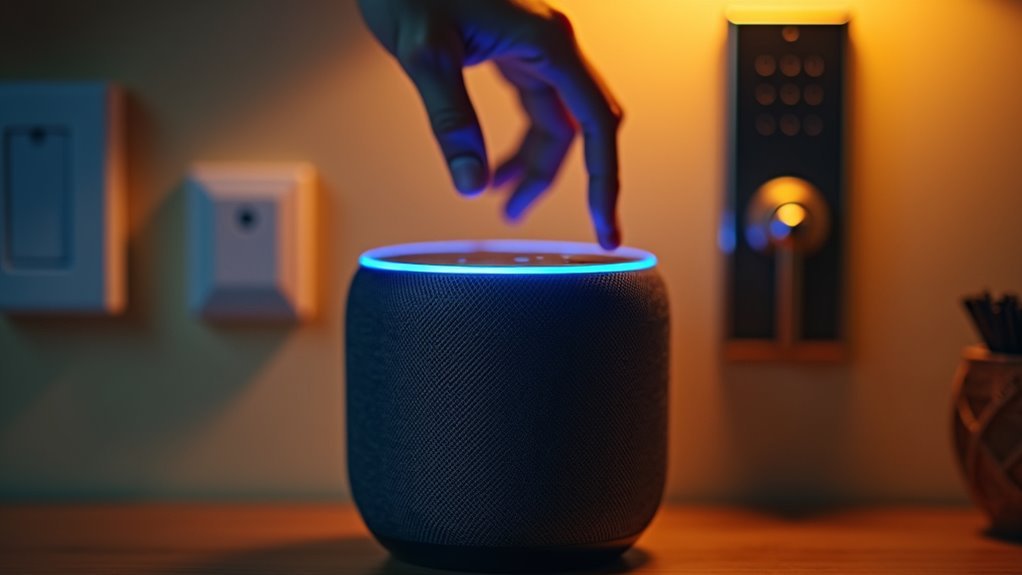
You’ll need to practice speaking your commands clearly and consistently to help your voice assistant understand you better.
Track how often your commands work correctly by paying attention to which phrases get recognized and which ones cause confusion or errors.
Monitor these success rates over time so you can identify patterns and adjust your pronunciation or command phrasing accordingly.
Practice Clear Command Pronunciation
Since voice assistants rely on precise audio interpretation, you’ll need to master clear pronunciation to achieve consistent command recognition. Clear articulation forms the foundation of successful voice commands, as even slight mispronunciations can lead to device response failures or unintended actions.
To improve your pronunciation effectiveness:
- Speak slowly and distinctly – Allow each word to be fully pronounced before moving to the next
- Minimize background noise – Turn down TVs, music, or other audio sources that might interfere
- Use consistent tone and volume – Maintain steady speech patterns your device can recognize
- Practice problematic words – Repeat commands that frequently cause misunderstandings until they become natural
Regular practice in different room conditions helps you identify ideal speaking techniques for reliable home control performance.
Monitor Response Success Rates
Perfect pronunciation means little if your commands consistently fail to work as intended. You’ll need to monitor success rates systematically to identify which voice commands consistently misfire. Track your command accuracy over several weeks, noting patterns in misrecognized phrases. Check your voice assistant’s logs to see which commands cause the most confusion.
Test commands in different environments—background noise and room acoustics greatly impact recognition. When you discover problematic commands, experiment with alternative phrasing. Instead of “turn on bedroom lights,” try “bedroom lights on” if the original fails frequently.
Continuously refine your approach based on data, not assumptions. Your speech patterns and home environment change over time, so regularly updating command structures guarantees sustained reliability and reduces frustration during daily use.
Secure Your Network and Enable Privacy Settings
While voice-controlled smart homes offer incredible convenience, they also create potential security vulnerabilities that require your immediate attention. Protecting your voice control system starts with establishing robust network defenses and configuring proper privacy settings.
To secure your network and maintain privacy:
- Strengthen Wi-Fi security – Use strong passwords and WPA3 encryption to prevent unauthorized access to your voice-activated devices.
- Update firmware regularly – Keep your smart devices current with the latest security patches and enhanced protection features.
- Configure privacy settings – Review data sharing preferences and disable always-on listening when unnecessary.
- Create microphone-free zones – Establish private areas and use physical switches to disable microphones when conversations should remain confidential.
These proactive measures guarantee your voice control technology serves you safely.
Start Small and Gradually Expand Your Voice-Controlled Ecosystem
Building a successful voice-controlled home doesn’t require purchasing every smart device at once. Start with one or two essential voice-controlled devices like smart lights or a voice assistant to create a manageable foundation.
Guarantee your chosen devices work with your preferred voice assistant, whether Amazon Alexa or Google Assistant, for streamlined setup.
Verify device compatibility with your preferred voice assistant before purchasing to avoid setup frustrations and ensure seamless integration.
As you become comfortable, gradually add more smart devices like thermostats or security cameras. This approach lets you learn each device’s specific voice commands without feeling overwhelmed.
Create routines using your voice assistant, such as a “Good Morning” command that activates multiple devices simultaneously.
Remember to regularly update firmware and software to maintain compatibility as you expand. This methodical approach guarantees you’ll confidently use voice commands throughout your growing ecosystem.
Train Household Members on Effective Voice Command Usage
After establishing your smart home foundation, you’ll need to assure everyone in your household can effectively use voice commands.
Training family members guarantees your Google Assistant responds accurately and executes home control tasks correctly.
Here’s how to optimize household voice command usage:
- Create individual user profiles – Set up personalized accounts within your voice assistant platform to improve recognition accuracy and customize responses for each family member.
- Practice together regularly – Schedule family sessions to test different commands and observe system responses, building confidence and familiarity.
- Share common command lists – Distribute tailored routines and frequently-used voice commands so everyone understands available functions.
- Emphasize clear speech – Remind household members to speak clearly at moderate pace, minimizing background noise interference.
This collaborative approach maximizes your smart home’s potential.
Frequently Asked Questions
How to Control Home Assistant by Voice?
You’ll control your home assistant by ensuring device compatibility, assigning unique names through companion apps, grouping related devices, speaking clearly with specific commands, and regularly updating firmware for ideal performance.
How Can I Improve My Voice Command?
You’ll improve voice commands by using clear, specific phrases instead of vague language. Update your device firmware regularly, create device groups for efficiency, test commands periodically, and learn your assistant’s capabilities.
How Can I Control My TV With Voice Commands?
You’ll need a compatible smart TV with Alexa or Google Assistant. Use specific commands like “Turn on TV” or “Watch Netflix.” Create device groups for routines and keep firmware updated for best performance.
How to Make a Voice Control Robot at Home?
You’ll need a microcontroller like Raspberry Pi, voice recognition software such as Google Speech Recognition, compatible actuators for movement, and a voice assistant platform. Test commands thoroughly to guarantee accurate responses.



Leave a Reply