
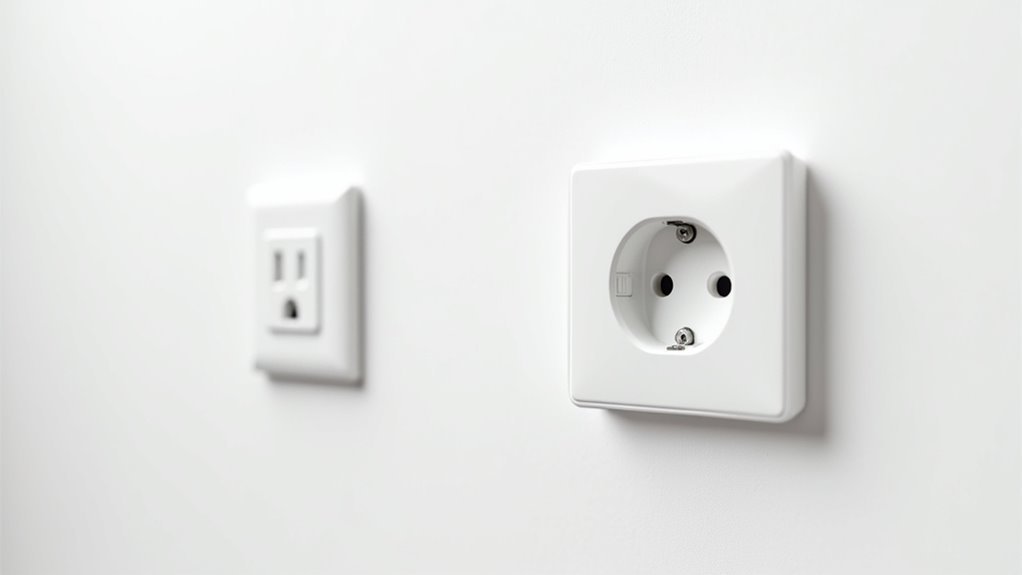
You’re probably paying more for electricity than you realize, and your regular outlets aren’t helping the situation. Converting to Zigbee smart outlets transforms your home’s energy consumption from a mystery into measurable data you can actually control. While the upfront investment might seem unnecessary, there’s a compelling case for why this upgrade could fundamentally change how you manage both convenience and costs in your daily routine.
Understanding Zigbee Technology and Smart Home Integration

When you’re considering converting your outlets to smart technology, Zigbee stands out as one of the most efficient wireless communication protocols available for home automation. This low-power system operates specifically on the 2.4 GHz frequency, reducing interference while maintaining reliable connections in dense environments.
Unlike Wi-Fi networks, Zigbee creates self-healing networks that automatically optimize connections without your intervention. You’ll benefit from supporting up to 65,000 devices, making it perfect for extensive smart home setups.
Zigbee’s self-healing mesh networks automatically optimize connections and support up to 65,000 devices without manual intervention.
Each Zigbee device consumes minimal energy—typically under 0.5W, often around 0.1W—ensuring your converted outlets won’t waste electricity when idle.
The protocol’s mesh network design means each connected outlet can communicate with others, creating a robust system that improves performance over time while maintaining exceptional reliability throughout your home.
Energy Monitoring and Consumption Benefits
You’ll gain immediate insight into your home’s power consumption through real-time tracking that shows exactly how much energy each connected device uses.
This monitoring capability reveals hidden energy drains from devices in standby mode, helping you identify which appliances consume power even when they’re turned off.
With this data, you can evaluate whether the energy savings from automated shutdowns justify the smart plug investment and make informed decisions about your household’s electricity usage.
Real-Time Power Tracking
Most Zigbee smart plugs feature built-in energy monitoring that displays real-time power consumption of your connected devices.
This real-time power tracking capability lets you see exactly how much electricity each device uses at any given moment, measured in watts or kilowatts.
You’ll quickly identify which appliances are energy hogs and which ones consume minimal power.
The data helps you spot devices that continue drawing power during standby mode, revealing hidden energy waste.
Most smart plugs also calculate kilowatt-hours over time, enabling you to estimate monthly electricity costs for specific devices.
This immediate feedback empowers you to make informed decisions about device usage, scheduling, and replacement.
You can optimize your energy consumption patterns and reduce utility bills through data-driven choices.
Standby Consumption Analysis
Vampire power draws silently drain your electricity bill as devices remain plugged in but supposedly “off.”
Even when you’re not actively using them, televisions, gaming consoles, coffee makers, and computer peripherals continue consuming power in standby mode.
Most devices average 0.1 to 0.5 watts during standby, which accumulates into substantial waste over time.
Zigbee smart plugs reveal exactly how much standby power your devices consume, giving you precise data to identify the biggest energy wasters in your home.
- Monitor real consumption patterns – Track which devices draw the most standby power throughout different times of day
- Calculate actual savings potential – Determine if automating power cuts will offset the smart plug’s own minimal consumption
- Prioritize high-impact devices – Focus on converting outlets powering equipment with higher standby draws first
Cost Savings Evaluation
Converting outlets to Zigbee smart plugs requires calculating whether the energy savings justify the investment. You’ll need to evaluate each device’s standby consumption against the smart plug’s 0.1-0.5W usage. While energy savings alone might not recoup costs, automation creates efficiency patterns that reduce overall consumption.
| Device Type | Annual Standby Cost | Potential Savings |
|---|---|---|
| Gaming Console | $15-45 | $10-35 |
| Home Theater | $8-25 | $5-20 |
Your smart plug investment becomes worthwhile when connected devices consume considerably more in standby mode. Beyond monetary savings, you’ll gain automated scheduling that prevents unnecessary power draw. The convenience factor often leads to better energy habits, making the conversion profitable through behavioral changes rather than pure energy reduction calculations.
Remote Control Capabilities Through Mobile Apps
Once you’ve installed Zigbee smart plugs, you’ll gain complete control over your connected devices through intuitive mobile apps that put power management at your fingertips.
You can turn any standard smart outlet on or off from anywhere in your home, whether you’re upstairs in bed or outside in the yard. The mesh network technology guarantees reliable connectivity throughout larger spaces.
Your mobile app becomes a central command center where you can:
- Schedule devices automatically – Set your coffee maker to start brewing before you wake up or turn off forgotten appliances
- Monitor energy consumption – Track real-time usage data to identify power-hungry devices and reduce electricity costs
- Enable voice control integration – Connect with Alexa or Google Assistant for hands-free operation
Voice Assistant Compatibility and Smart Scenes

When you integrate your Zigbee smart outlets with voice assistants like Amazon Alexa or Google Assistant, you’ll gain access to hands-free control that transforms how you interact with your home devices.
Voice assistant compatibility enables you to turn devices on or off with simple commands, while smart plugs respond instantly to your requests.
Smart scenes take this convenience further by allowing you to control multiple devices simultaneously. You can create custom scenes for different routines—activate your morning scene to turn on coffee makers and lights, or use a bedtime scene to shut down all electronics.
Your voice assistant will also provide real-time status updates on energy usage and device performance, making home automation effortless and efficient.
Installation Requirements and Safety Considerations
Before you begin converting your outlet to a Zigbee smart outlet, you’ll need to turn off power at the circuit breaker and use a voltage tester to confirm there’s no electrical current flowing through the outlet.
Safety isn’t optional when working with electricity, so don’t skip this essential step that prevents shock or injury.
Once you’ve secured the power source, you can focus on proper wire connection methods that’ll guarantee your smart outlet functions reliably and safely.
Circuit Breaker Safety First
Safety takes priority when working with electrical systems, so you’ll need to shut off power at the circuit breaker before touching any wires or outlet components.
Circuit breaker safety isn’t just a recommendation—it’s crucial for preventing electrical shock or serious injury during installation.
Once you’ve switched off the breaker, don’t assume the power is completely off. Use a voltage tester to confirm no electricity is flowing through the outlet before proceeding with any work.
Key safety steps include:
- Double-check the breaker – Test the outlet with a device to confirm power is completely off
- Use a voltage tester – Verify no current is running through wires before handling them
- Keep the breaker off – Don’t restore power until installation is completely finished
Proper Wire Connection Methods
Three essential wires—line, neutral, and ground—must connect securely to their corresponding terminals on your Zigbee smart outlet for safe, reliable operation.
Before making connections, use a voltage tester to confirm no power flows through the existing outlet. This verification step prevents dangerous electrical shock during installation.
Match each wire to its designated terminal: the hot wire connects to the line terminal, white wire to neutral, and bare copper wire to ground.
Twist wire nuts clockwise until tight, ensuring no exposed copper remains visible. If wire nuts prove challenging, you can wrap electrical tape around connections for additional security.
After completing all connections, carefully fold wires into the electrical box and secure your smart outlet.
Test the plug’s functionality only after restoring circuit breaker power.
Choosing the Right Zigbee Smart Outlet Hardware

When you’re ready to upgrade your outlets to smart functionality, selecting the right Zigbee hardware becomes essential for building a reliable and efficient network.
You’ll want to focus on devices that offer both performance and compatibility with your existing setup.
Consider these key factors when choosing your smart outlet:
- Power monitoring capabilities – Select outlets that track energy usage to identify high-consumption devices and justify their implementation.
- Router functionality – Choose devices with reliable routing capabilities to strengthen your zigbee network’s stability and range.
- Energy efficiency – Opt for plugs consuming under 0.5W to minimize standby power waste.
Popular options like the Sonoff S31 Lite and Sengled smart plug offer excellent compatibility with Zig2mqtt while delivering consistent performance for your smart home automation needs.
Network Configuration and Mesh Connectivity
Once you’ve selected your Zigbee smart outlets, proper network configuration becomes the foundation for reliable mesh connectivity throughout your home. Each outlet you install acts as a router, extending your network’s range and creating multiple pathways for signal transmission.
Every Zigbee smart outlet becomes a network router, automatically extending your mesh range and creating redundant signal pathways throughout your home.
Your devices will automatically select their parent based on response time, but you can enhance performance by strategically placing outlets throughout your space.
Consider building materials and potential interference sources when planning your single plug locations. Thick walls and metal appliances can disrupt signals, so you’ll need adequate coverage between rooms.
Occasionally unplugging and reconnecting devices forces route recalculation, potentially improving connections. Use monitoring tools like XCTU to evaluate your network’s Link Quality Indicator, ensuring each outlet maintains strong connectivity for peak mesh performance.
Driver Selection for Optimal Device Performance
After establishing your mesh network, choosing the appropriate driver becomes critical for accessing your Zigbee smart outlets’ full potential.
Proper driver selection directly impacts your device’s functionality and performance capabilities. You’ll want to select the outlet-specific driver rather than generic switch drivers.
The outlet driver provides essential power reporting features that generic drivers can’t access, giving you valuable energy consumption data. This choice guarantees you’ll get proper on/off control plus all outlet-specific features your Zigbee devices offer.
- Power Reporting Access: Outlet drivers enable energy monitoring capabilities that generic drivers ignore
- Enhanced Device Features: Access manufacturer-specific functions unavailable through basic switch drivers
- Network Stability: Proper driver selection combined with Device Watchdog monitoring prevents communication drops and maintains reliable connections
Understanding driver differences maximizes your smart outlet investment.
Troubleshooting Common Connectivity Issues
You’ll encounter three main connectivity challenges when setting up your Zigbee smart outlets: devices that won’t pair properly, network routing issues that disrupt communication, and signal interference that weakens your connections.
These problems can frustrate your smart home setup, but they’re typically solvable with the right troubleshooting approach.
Let’s tackle each issue systematically to get your Zigbee network running smoothly.
Device Pairing Failures
Device pairing failures represent one of the most frustrating challenges you’ll encounter when converting outlets to Zigbee smart devices.
These connectivity hiccups can stem from various factors, but you can resolve most issues with targeted troubleshooting approaches.
- Reset and relocate – Reset your problematic device and move it closer to your Zigbee router during the initial pairing process for stronger signal strength.
- Check compatibility – Verify that your devices, especially Aqara sensors, are compatible with your specific router model to avoid known pairing conflicts.
- Monitor network performance – Use tools like XCTU to analyze your Zigbee network’s performance and identify connectivity bottlenecks that cause device pairing failures.
These systematic steps will considerably improve your success rates when adding new smart outlets to your network.
Network Routing Problems
Even after successfully pairing your devices, network routing problems can emerge as silent performance killers that gradually degrade your Zigbee smart outlet system.
Your initial connectivity map doesn’t reflect ideal routing, so you’ll need to monitor device performance over time to identify stability issues. If you’re experiencing connectivity problems across two floors, remember that not all devices act as routers—Sengled bulbs, for example, don’t support this function, creating potential dead zones.
Try unplugging problematic devices to force route recalculation, which can improve connectivity for other devices. When adding new outlets, position them near your desired router to guarantee strong connections, as distance and obstacles considerably hinder performance throughout your home.
Signal Interference Solutions
Beyond routing challenges, signal interference poses another considerable threat to your Zigbee smart outlet performance, requiring targeted diagnostic strategies to identify and eliminate connectivity disruptions.
Building materials like concrete walls and metal structures can severely weaken Zigbee signals, while other wireless devices operating on similar frequencies create competing traffic that degrades your network’s reliability.
Effective signal interference solutions involve systematic monitoring and environmental adjustments:
- Use diagnostic tools like XCTU to monitor LQI (Link Quality Indicator) numbers and identify weak connection points in real-time
- Relocate competing wireless devices away from your Zigbee network to reduce frequency conflicts and signal overlap
- Install additional router devices strategically throughout your home to strengthen signal paths around physical barriers
These proactive measures will considerably improve your smart outlet connectivity and overall network stability.
Cost Analysis: Energy Savings Vs Investment
When you’re considering whether smart plugs will pay for themselves through energy savings, the math often doesn’t add up in favor of pure financial return. Your cost analysis should include the upfront investment against potential energy savings vs investment returns.
Zigbee smart plugs consume around 0.1W while providing minimal savings unless you’re controlling high-consumption devices with significant standby power draw.
Smart plugs themselves use 0.1W continuously, so they only save money when controlling devices with higher standby consumption.
You’ll find that devices consuming less than the plug itself won’t generate meaningful savings. Additionally, frequent power cycling can stress electronics and reduce their lifespan, potentially costing you more in replacements.
Before investing, evaluate each device’s standby consumption. The real value often lies in convenience and automation rather than recouping your initial investment through reduced electricity bills.
Device Lifespan and Power Cycling Considerations
Smart plugs can inadvertently damage your electronics if you’re not careful about how frequently you cycle power to your devices.
Frequent power cycling creates inrush current that stresses components, potentially shortening their lifespan. Many modern electronics are designed to remain in standby mode, where they experience less thermal shock compared to being fully powered off.
Consider these factors when using smart plugs:
- Evaluate standby consumption – Check if your device’s standby power usage justifies frequent cycling
- Identify cycling-sensitive devices – TVs, gaming consoles, and computers benefit from staying powered
- Use scheduling wisely – Limit automated on/off cycles to one or two per day maximum
Smart plugs work best when you balance energy savings with device longevity, avoiding unnecessary power cycling for sensitive electronics.
Automation Scheduling and Timer Functions
Once you’ve installed your Zigbee smart outlets, you’ll discover that automation scheduling transforms how you manage your home’s energy consumption. You can set specific times for devices to turn on or off, eliminating the need for manual intervention while enhancing convenience and efficiency.
The timer function proves particularly valuable, allowing automatic power cut-off after your defined countdown period. This prevents energy waste from devices you’ve accidentally left running. You’ll create routines that align with your daily schedule, ensuring lights and appliances operate only when needed.
Integration with smart home ecosystems enables complex automation scheduling scenarios. You can link device operations to specific events—lights turning on at sunset or appliances powering down when you leave home, maximizing both convenience and energy savings.
Maintenance and Long-term Network Management
Although your Zigbee smart outlet network runs smoothly after initial setup, maintaining ideal performance requires ongoing attention to device connections and network health.
Regular maintenance guarantees your outlets continue operating reliably and prevents connectivity issues from disrupting your smart home automation.
Consistent network maintenance ensures your smart outlets deliver uninterrupted performance and seamless home automation integration.
You’ll need to monitor several key aspects of your network’s health:
- Check LQI numbers periodically – These Link Quality Indicator values reveal connection strength between devices and help you identify weak points before they cause problems.
- Select devices with strong routing capabilities – Choose outlets known for reliable mesh networking to maintain robust communication pathways.
- Implement Device Watchdog monitoring – This prevents devices from dropping off your network due to inactivity and maintains consistent connectivity.
Verifying Zig2mqtt compatibility during maintenance optimizes performance and keeps your smart outlet ecosystem running efficiently long-term.
Frequently Asked Questions
What Is the Point of a Smart Outlet?
You’ll save energy by eliminating standby power from devices, control appliances remotely for convenience, automate schedules to optimize usage, and extend your electronics’ lifespan by reducing power cycling stress.
What Is the Advantage of Zigbee Over Wi-Fi?
You’ll get better battery life, support for hundreds of devices, extended range through mesh networking, less interference on dedicated frequencies, and faster response times compared to Wi-Fi’s limitations.
Why Do You Need Zigbee?
You need Zigbee to create a reliable mesh network for your smart home devices that consumes minimal power while enabling remote control, automation, and energy monitoring across multiple compatible platforms.
Is Zigbee Being Replaced?
No, Zigbee isn’t being replaced. You’ll find it’s still thriving with Zigbee 3.0’s improved interoperability, established ecosystem, and reliable performance. While competitors like Thread exist, Zigbee’s market presence guarantees continued relevance.

Leave a Reply